HAND-KNOTTED
Knot by knot
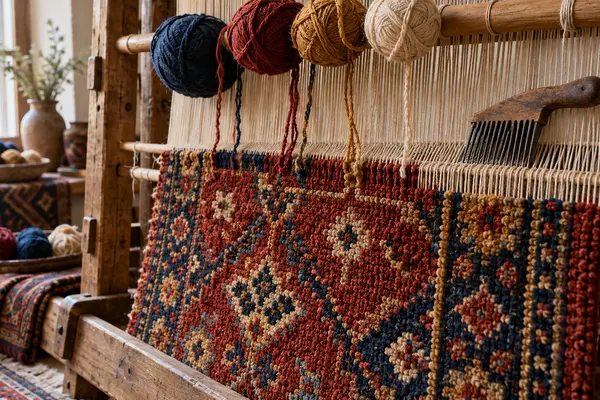
Short lengths of wool are knotted around pairs of warps, row after row, then trimmed into a soft pile.
See the oldest one doodlerugs
HOW RUGS ARE MADE
Every rug starts as threads on a loom. What happens next decides how it looks and feels.
Try the knot check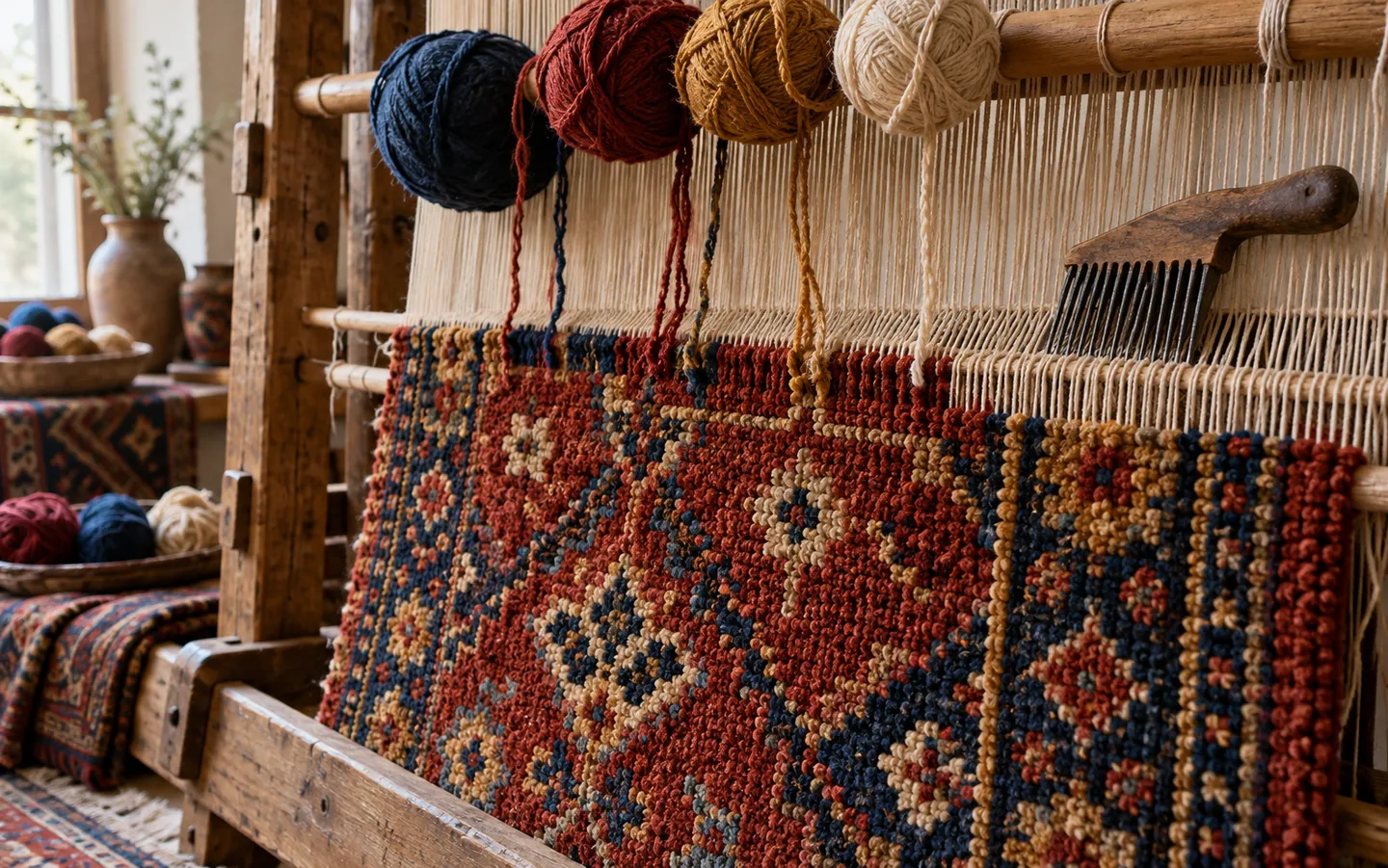
KNOTby knot
A hand-knotted rug is built knot by knot into a soft pile. A kilim is woven flat, its pattern made by the threads themselves. Here is how each is made, from a 2,400-year-old carpet to the slits in a kilim, with museum sources.
Plain English, with the sources linked.
Updated
THE SHORT ANSWER
Knotted rugs grow a soft pile.
Flat-woven rugs make the pattern in the weave.
HAND-KNOTTED
Short lengths of wool are knotted around pairs of warps, row after row, then trimmed into a soft pile.
See the oldest oneFLAT-WOVEN
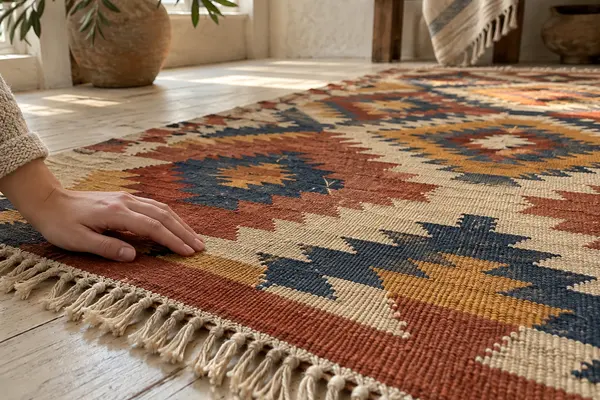
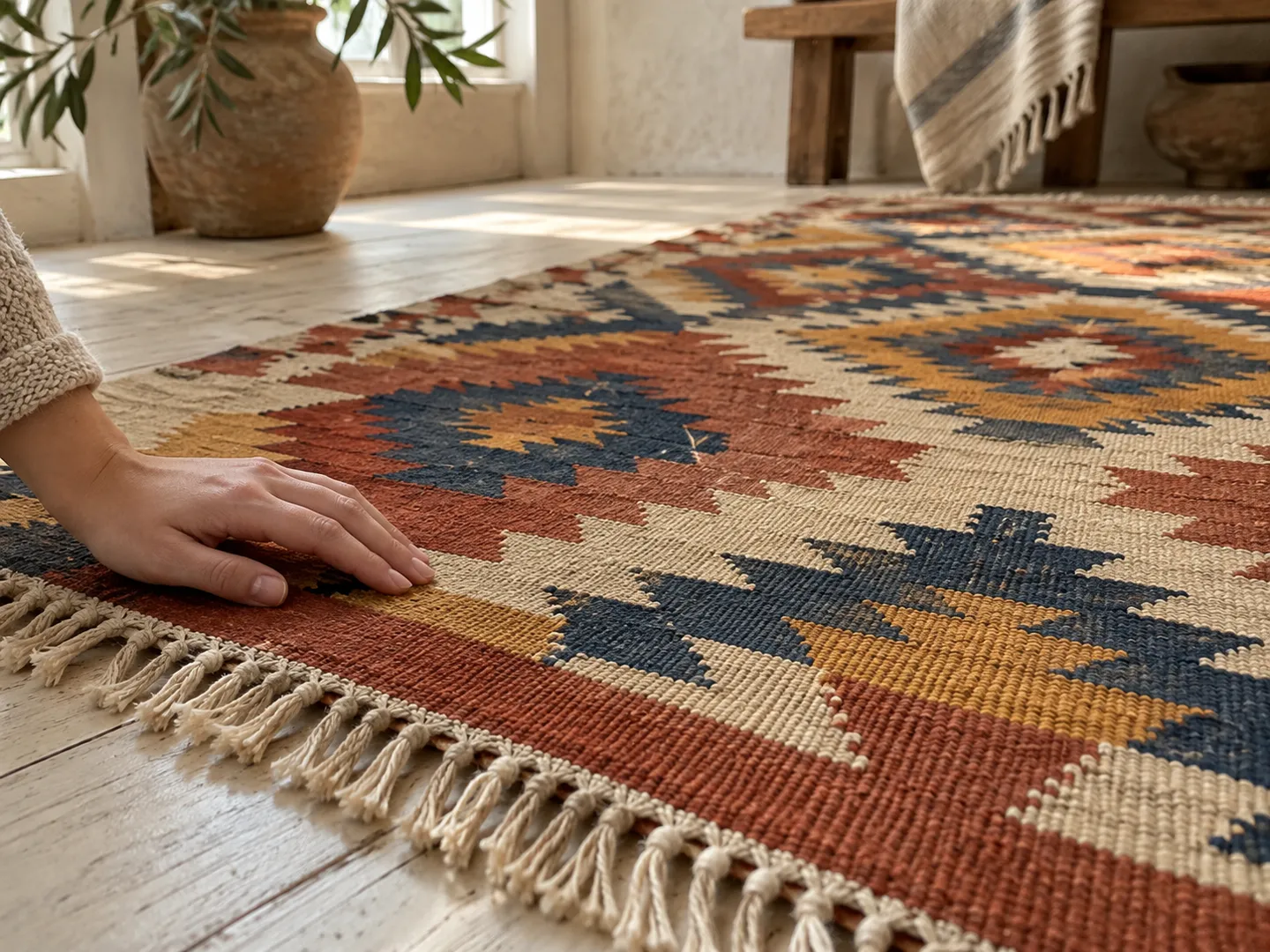
No knots, no pile. Coloured wefts hide the warps, and each colour is woven in its own block.
Why the slits?THE KNOT ITSELF
A symmetrical knot rises evenly; an asymmetrical one opens to one side. Weaving traditions favoured one or the other.
Try the knot checkA QUICK KNOT CHECK
Pick a construction to see how it works. The bar shows whether it gives the rug a pile.
Descriptions follow the Encyclopaedia Iranica, the Met and the V&A. Real rugs can mix techniques, so this is a guide to the terms, not a valuation.
TWO CARPETS WORTH KNOWING
One shows how far back the craft goes.
The other shows how fine it can get.
5th–4th century BC
The oldest known pile carpet
Found almost intact in a frozen burial mound in the Altai Mountains of Siberia, where the ice preserved it. It is now in the State Hermitage Museum in St Petersburg.
PAZYRYK · STATE HERMITAGE
~5,300 knots
Knots in every 10 cm square
Its inscription dates it to 1539–40. The V&A says up to ten weavers may have worked on it at once, over several years, with wool pile coloured by dyes such as pomegranate rind and indigo.
ARDABIL · V&A, LONDON
Both are hand-knotted pile carpets. Separated by about two thousand years, they are made the same basic way: knots tied around warps, held in place by wefts, then trimmed.
READ A RUG
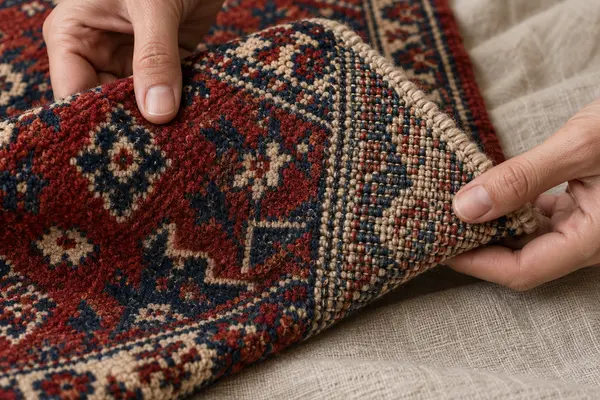
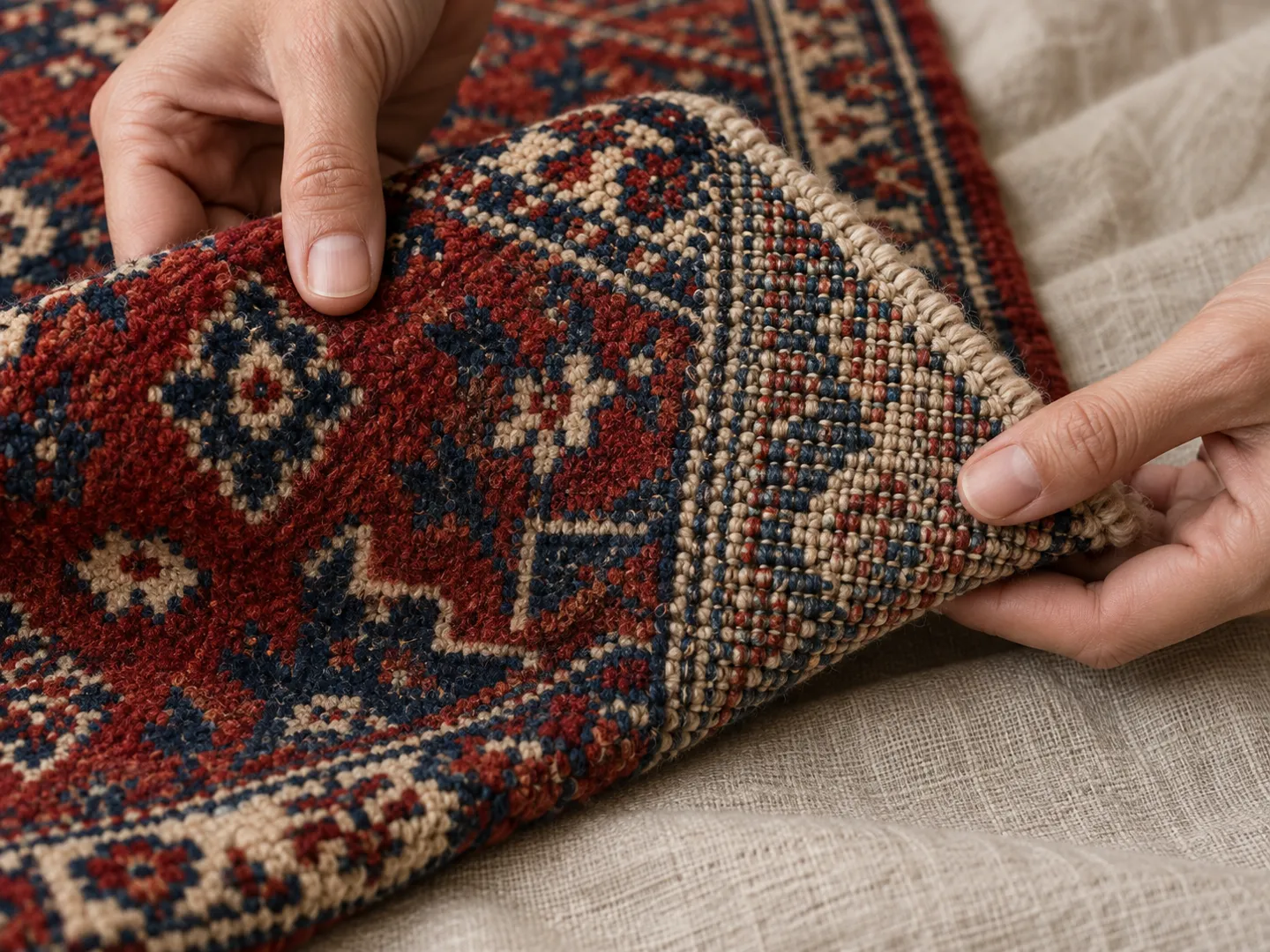
On a hand-knotted rug the pattern shows on the back as a grid of tiny knots. A kilim usually looks much the same on both sides.
Run a hand across it. A knotted rug has a raised, cut pile with a direction; a flat-weave lies flat and thin.
Count the knots along 10 cm on the back, across and down, and multiply the two numbers to estimate knots per square decimetre.
Small vertical gaps where two colours meet are a sign of slit-tapestry weaving, the classic kilim technique.
RUG FACTS
The Pazyryk carpet, from the 5th to 4th century BC, is thought to be the oldest surviving pile carpet. It is in the State Hermitage Museum.
Knots are generally tied to pairs of warps. The symmetrical knot was long called the Turkish or Ghiordes knot; the asymmetrical knot opens to one side, usually the left.
In Persia an asymmetrical knot was most often used, and in Turkey a symmetrical one, according to the Met. It is one clue, not proof, of where a rug was made.
In the West, knot density is the number of knots per square decimetre or square inch. Knots tied over more than two warps (jofti) are quicker but give less detailed designs.
The V&A describes kilims as a weft-faced plain weave. Each colour is woven in its own block, which leaves a slit where colours meet; weavers favour diagonals to keep slits short.
QUICK QUESTIONS
Short answers to the questions people ask most.
The Pazyryk carpet is thought to be the oldest surviving pile carpet. It was found almost intact in a frozen burial mound in the Altai Mountains of Siberia, dates from the 5th to 4th century BC and is now in the State Hermitage Museum in St Petersburg.
A hand-knotted rug has a pile: short lengths of yarn are knotted around the warp threads and trimmed, giving a soft, raised surface. A flat-woven rug such as a kilim has no knots and no pile; the pattern is made by the coloured weft threads themselves.
The symmetrical knot, long called the Turkish or Ghiordes knot, rises evenly between two warps. The asymmetrical knot opens to one side. The Met notes that Persian weavers most often used the asymmetrical knot and Turkish weavers the symmetrical one.
In the West, knot density is given as the number of knots per square decimetre or per square inch. The Ardabil carpet at the V&A, dated 1539 to 1540, has about 5,300 knots in every 10 cm square.
In tapestry weaving each colour is woven back and forth in its own block, so a vertical slit forms where two colour blocks meet. The V&A notes this makes kilims vulnerable to wear, and that weavers use diagonal lines to keep slits short.
A NAME WITH TEXTURE
doodlerugs.com is part of the DoodleSale portfolio. It isn't in an auction right now, but you can ask about leasing it.